Physical Address
304 North Cardinal St.
Dorchester Center, MA 02124
Physical Address
304 North Cardinal St.
Dorchester Center, MA 02124

Discover the dramatic river loops, ancient limestone caves, and rich local heritage of Yeongwol, South Korea's hidden geological gem.
While international travelers often flock to the neon-lit streets of Seoul or the coastal beaches of Busan, those seeking a deeper, more contemplative connection with the Korean landscape head inland. Tucked away in the southern reaches of Gangwon State lies Yeongwol County, a mountainous sanctuary where deep-green rivers carve dramatic paths through ancient limestone cliffs. Defined by its unique geology, tragic royal history, and a remarkably preserved slow-paced lifestyle, Yeongwol offers an authentic escape into South Korea’s rural soul.
For centuries, the rugged topography of Yeongwol kept it isolated, preserving both its natural environment and its distinct cultural identity. Today, it stands as a premier destination for eco-tourism, geological exploration, and slow travel. Here, the hurried pace of modern life dissolves into the sound of rushing river water and the rustle of pine needles on high cliffs. This guide explores the remarkable geological wonders, river-carved histories, and warm small-town culture that make Yeongwol an unforgettable detour on any Korean itinerary.
Yeongwol is a landscape defined by water. Two major rivers, the Donggang (East River) and the Seogang (West River), snake through the county, slicing through the limestone bedrock to create dramatic canyons, sheer cliffs, and unique landforms that are famous throughout Korea. These rivers are not merely scenic backdrops; they are the sculptors of the region’s geography and the keepers of its history.
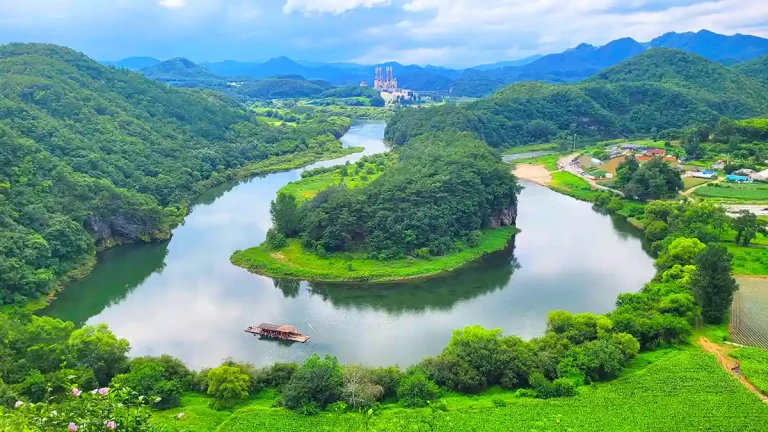
Perhaps the most iconic geological feature in Yeongwol is the Hanbando Terrain, located along the Seogang River. Over millennia, the river has eroded the limestone cliffs in an extreme, sweeping bend. The result is a peninsula of land that, when viewed from the high cliffs of Seonam Village, looks astonishingly like a miniature map of the Korean Peninsula.
To reach the viewing platform, visitors take a gentle walk through a dense forest of red pines. As the trees part, the view opens up to reveal the emerald waters of the Seogang wrapping around the peninsula, complete with a steep cliffside on the east (mimicking the mountainous east coast of Korea) and a gentle slope on the west. The sheer geological precision of this natural formation is breathtaking, making it a must-visit for anyone interested in the power of river erosion.
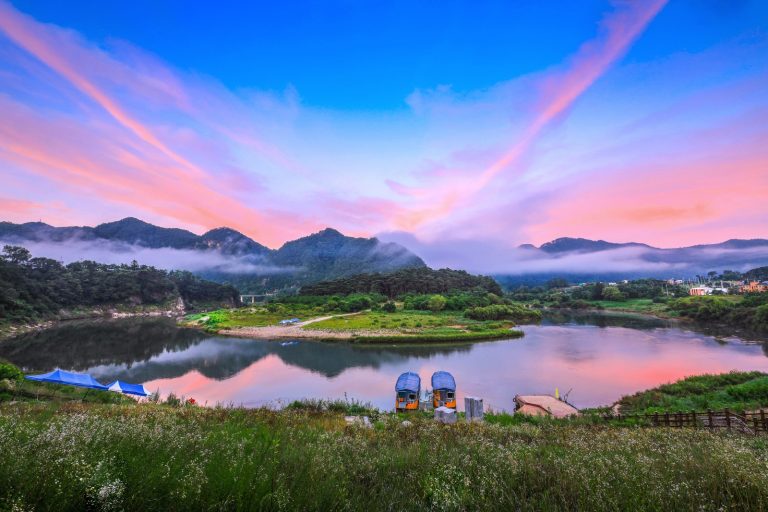
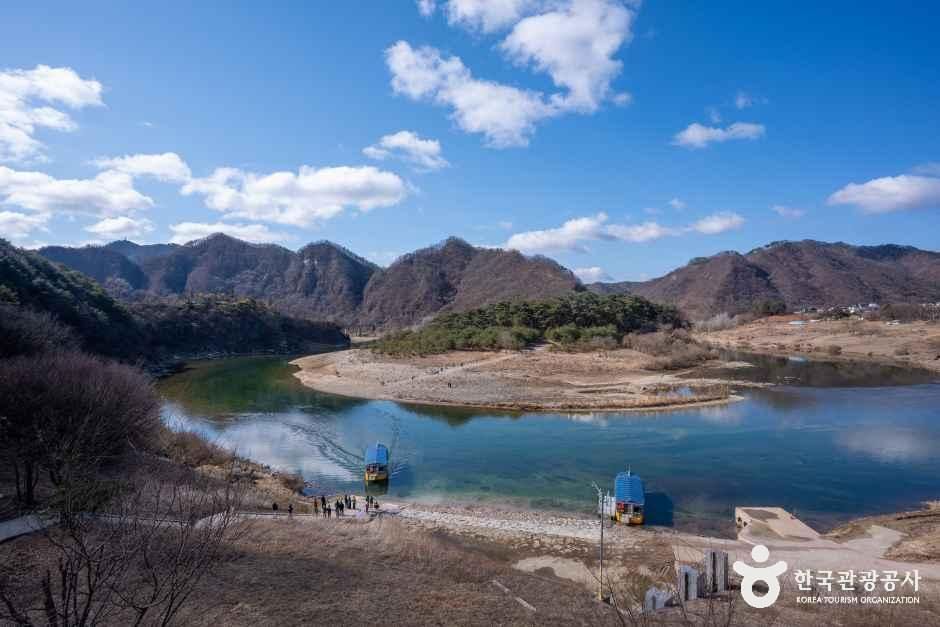
Further along the Seogang River lies Cheongryeongpo, a place where natural beauty and human tragedy are inextricably linked. This small, isolated peninsula is bounded on three sides by deep, fast-flowing river waters and on the fourth by a towering, sheer cliff known as Seonam. Because of this extreme geographical isolation, it served as a natural prison.
In the mid-15th century, the young King Danjong was deposed by his ambitious uncle and exiled to this remote spot. Surrounded by towering pine trees and the silent river, the teenage king spent his lonely days here before his tragic death. Today, a short ferry ride takes visitors across the narrow river to the pine grove. Walking among these ancient trees, some of which are hundreds of years old, one can feel a profound sense of quiet and melancholy. The geography that once imprisoned a king now preserves his memory in a sanctuary of absolute peace.
The limestone foundations of Yeongwol do not just create stunning surface cliffs; they also hide a subterranean world of incredible complexity. The region is rich in karst topography, characterized by sinkholes, sinking streams, and extensive cave systems formed over hundreds of millions of years.
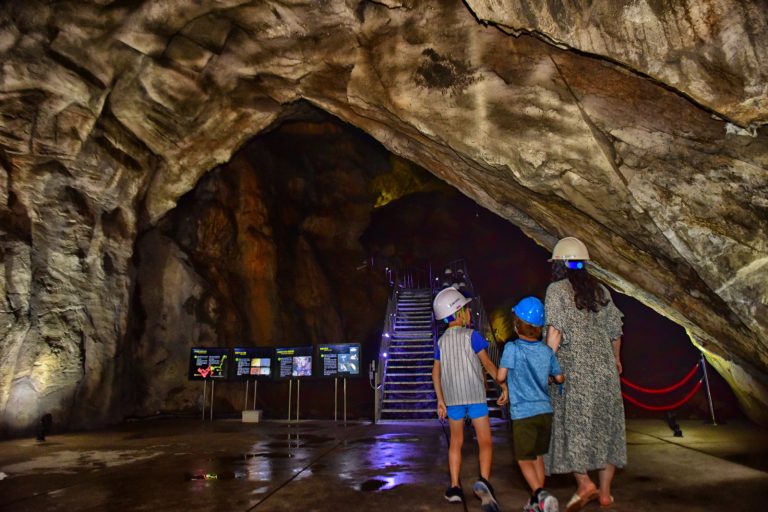
Located near the Namhangang River, Gossi Cave is one of South Korea’s most famous limestone caves. Spanning several kilometers, a portion of this ancient cavern is open to the public, offering a fascinating look at the region’s subterranean geology. The cave gets its name from the local Gossi family, who hid within its dark chambers during the late 16th-century invasions.
Inside, the cave is a cool, damp labyrinth of stalactites, stalagmites, and stone pillars. The path is narrow and requires visitors to wear safety helmets as they navigate low ceilings and metal walkways suspended over deep pools of crystal-clear water. The formations inside are still actively growing, fed by the mineral-rich water dripping from the ceiling. It is a stark, primal experience that contrasts beautifully with the lush, green river valleys above.
Beyond its geological marvels, Yeongwol is a place of deep-rooted traditions and warm hospitality. The town itself has resisted the rapid urbanization seen elsewhere in Korea, maintaining a quiet, friendly atmosphere where visitors are welcomed with open arms.
To truly understand the culture of Yeongwol, one must visit the Seobu (West) Market. This traditional market is the culinary and social hub of the county. Unlike the bustling, tourist-heavy markets of Seoul, Seobu Market retains an authentic, local feel. Here, elderly vendors sit behind low counters, preparing regional specialties right before your eyes.
The star of Yeongwol’s culinary scene is memil jeonbyeong (buckwheat crepes). Buckwheat thrives in the mountainous, rocky soil of Gangwon State, and locals have perfected its use. These thin, savory crepes are filled with a spicy mixture of chopped kimchi, pork, and glass noodles, then rolled up and sliced. Another local favorite is memil jeon, a simple, delicate pancake made with whole napa cabbage leaves pressed into buckwheat batter. Pair these dishes with a bowl of locally brewed corn makgeolli (rice wine) for an authentic taste of Gangwon comfort food.
In a creative bid to preserve its heritage and attract culturally minded travelers, Yeongwol has styled itself as the “County of Museums.” The region is home to dozens of small, highly specialized museums scattered throughout the valleys. These institutions cover everything from traditional printing and African art to geographical history and astronomy.
Among the most notable is the Donggang Museum of Photography, which celebrates South Korea’s rich history of documentary photography. Located on a hill overlooking the town, the museum hosts international exhibitions and showcases how the rugged landscapes of Gangwon have inspired artists for generations. This dedication to niche culture adds a surprising layer of intellectual depth to a trip that is otherwise focused on the great outdoors.
Yeongwol is a destination that rewards slow, independent travel. However, because it remains off the beaten path for most international tourists, a little extra preparation goes a long way.
Yeongwol is accessible from Seoul via intercity buses departing from the East Seoul Bus Terminal. The journey takes approximately two to two and a half hours, winding through the scenic mountain passes of Gangwon State. Alternatively, travelers can take the train, though schedules may require a transfer depending on your starting point.
Once in Yeongwol, navigating the rural geography can be challenging without a car. While local buses run to major sites like the Hanbando Terrain and Gossi Cave, departures can be infrequent. For the ultimate freedom to explore remote river bends and mountain viewpoints, renting a car from a larger nearby city like Wonju or using local taxi services is highly recommended. Smartphone navigation apps like KakaoMap or Naver Map are essential, as they provide the most accurate routes and public transit schedules for rural Korea.
Each season brings a distinct character to Yeongwol’s rivers and cliffs:
Regardless of when you choose to visit, Yeongwol offers a rare opportunity to step off the treadmill of modern travel. It is a place where geology is not just a science, but a visible, dramatic force that has shaped the history, food, and soul of a resilient mountain community.
Please note: Operating hours for local museums, ferry services to Cheongryeongpo, and access to Gossi Cave can vary depending on seasonal weather conditions, river levels, and local conservation efforts. Visitors are strongly encouraged to check the official Yeongwol Tourism website or consult with local tourist information centers before finalizing their travel itineraries.

![[강원평화누리자전거길 10코스] 양구 두타연길 - Korea Tourism Organization](https://allforkorea.com/wp-content/uploads/2026/08/kto-강원평화누리자전거길-10코스-양구-두타연길-1787920867576-375x250.jpg)