Physical Address
304 North Cardinal St.
Dorchester Center, MA 02124
Physical Address
304 North Cardinal St.
Dorchester Center, MA 02124

![[강원평화누리자전거길 10코스] 양구 두타연길 - Korea Tourism Organization](https://allforkorea.com/wp-content/uploads/2026/08/kto-강원평화누리자전거길-10코스-양구-두타연길-1787920867576.jpg)
Discover Yanggu, Gangwon State: a quiet retreat featuring DMZ history, pristine valley trails, rich local siraegi cuisine, and peaceful art museums.
For international visitors to South Korea, the typical itinerary often revolves around the neon-lit avenues of Seoul, the coastal energy of Busan, or the volcanic landscapes of Jeju Island. However, nestled deep within the mountainous terrain of Gangwon State lies Yanggu County, a tranquil region that reveals a dramatically different side of the Korean Peninsula. Known geographically as the symbolic geographic center of the united peninsula, Yanggu offers a rare blend of pristine eco-tourism, poignant borderland history, and a rich, humble food culture rooted in the surrounding mountains and fertile soils.
While many travelers experience the Demilitarized Zone (DMZ) on rushed, highly commercialized day tours from Seoul, Yanggu offers a far more atmospheric, unhurried perspective. Here, military history sits alongside quiet forest sanctuaries where wildlife flourishes in zones that were off-limits to humans for decades. Whether you are seeking a peaceful escape into untouched nature, curious about modern Korean history, or eager to taste authentic highland cuisine, Yanggu provides an unforgettable, off-the-beaten-path travel experience.
Yanggu is located in the northern inland section of Gangwon State, directly bordering the DMZ. Following the Korean War, large portions of the county fell within or adjacent to restricted border zones. Ironically, this long period of military restriction preserved vast swathes of forest, river systems, and alpine valleys from industrial development. Today, Yanggu promotes itself as a sanctuary of peace and nature, where visitors can slow down and appreciate a softer, quieter rhythm of life.
Geographically, Yanggu boasts a landscape shaped by dramatic mountains and deep lake waters. To the south lies Paroho Lake, while the northern terrain rises into steep ridge lines that overlook the border with North Korea. Because of its geographic isolation, local traditions have remained exceptionally intact, particularly regarding agriculture and food preservation. It is a destination ideal for independent travelers who appreciate slow travel, scenic drives, and meaningful cultural context.
Experiencing the border in Yanggu feels vastly different from visiting the popular sites near Paju or Panmunjom. The mood here is quiet, contemplative, and heavily intertwined with the natural surroundings. Because Yanggu witnessed some of the fiercest combat during the Korean War, the land carries historical weight, yet it is framed by stunning mountain panoramas.
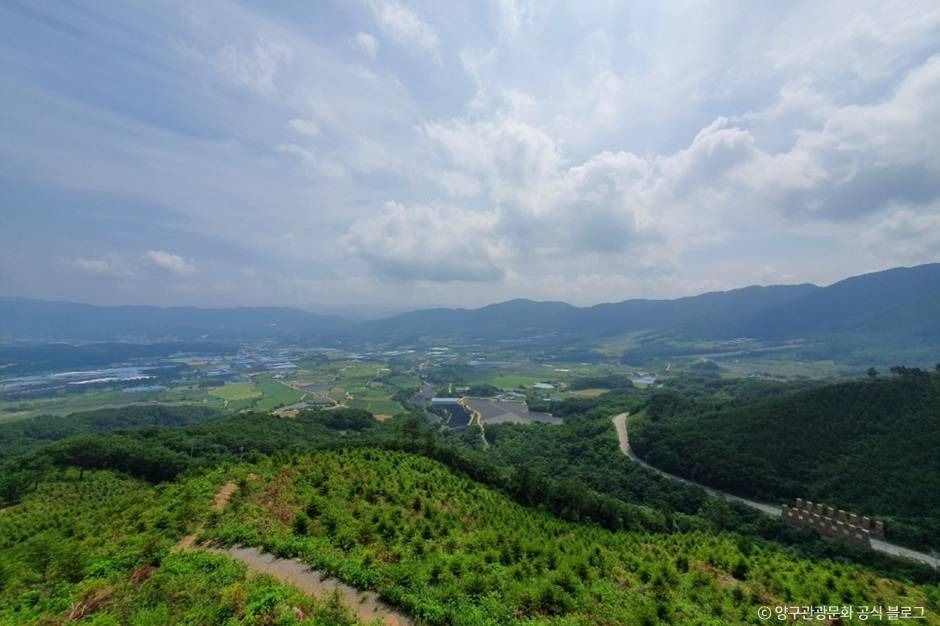
One of the most remarkable geological and historical features in South Korea is the Haean Basin, universally known by its wartime nickname, the Punchbowl. Named by a war correspondent due to its resemblance to a deep punch bowl, this massive crater-like depression is completely encircled by high mountain peaks ranging up to 1,100 meters in elevation.
Standing at the edge of the basin, visitors look down upon a peaceful grid of farmland and small villages nestled within the mountain walls. During the war, the ridges surrounding this basin were the sites of intense battles, including the Battle of Heartbreak Ridge and the Battle of Bloody Ridge. Today, the basin is celebrated for producing some of the country’s finest high-altitude produce, particularly radishes, apples, and mountain greens. The contrast between the area’s turbulent military history and its current agricultural serenity is profound.
Perched high on a ridge overlooking the DMZ, Eulji Observatory offers one of the most comprehensive views into North Korea available anywhere along the border. On clear days, visitors can gaze across the Military Demarcation Line into the mountain ranges of North Korea, observing military outposts and distant northern peaks. The observatory provides clear context regarding the geography of the partition, making it an essential visit for anyone trying to understand the division of the peninsula.
Nearby lies the Fourth Tunnel, an underground infiltration tunnel discovered in the early 1990s. Visitors can enter a section of the tunnel via a small electric train system, gaining insight into the cold war tensions that defined the region for decades. The subterranean atmosphere is cool and sobering, serving as a physical reminder of the ongoing division just meters beneath the surface.
Beyond its military heritage, Yanggu is a sanctuary for nature lovers. The region’s ecological purity is a direct result of restricted human access over the past half-century, allowing rare plants, birds, and aquatic life to thrive.
For decades, Dutayeon Valley was completely closed to the public due to its location within the Civilian Control Line. Opened to visitors in recent years under controlled access, it remains one of South Korea’s most pristine freshwater ecosystems. The valley features crystal-clear streams tumbling over wide rock beds, vibrant forest canopy, and dramatic rock formations.
Walking along the designated boardwalks and gravel paths of Dutayeon, travelers can see untouched mountain streams where rare cold-water fish swim freely. Along the trail, subtle reminders of the past remain—such as preserved military signs and fenced-off zones—creating a unique atmosphere where nature has reclaimed spaces once marked by conflict. The walking trails are gentle and flat, suitable for visitors of all fitness levels who want to enjoy the quiet rustle of leaves and the sound of rushing water.
In the southern part of Yanggu lies Lake Paroho, an expansive artificial lake created by dam construction. Situated within a quiet bay of the lake is Hanbando Island, an artificial landform meticulously shaped in the exact outline of the entire Korean Peninsula. A series of wooden pedestrian bridges connects the shore to the island, allowing visitors to stroll across the water and explore walking paths laid out across the miniature peninsula.
The area around Hanbando Island is popular for relaxed walks, particularly during late afternoon when the surrounding mountains cast long reflections across the calm water. Solar-powered boats and water activities are occasionally available, providing a peaceful perspective on the surrounding lake scenery without disturbing the quiet atmosphere.
Despite its remote borderland position, Yanggu has long cultivated a strong creative identity. The county is deeply connected to two major artistic legacies: modern Korean painting and historic white porcelain craft.
Park Soo-keun is widely regarded as one of South Korea’s most beloved 20th-century artists. Born in Yanggu, he was famous for portraying the daily lives of ordinary working people—women washing clothes by rivers, grandmothers carrying baskets, and children playing in villages—during the difficult mid-20th century. His paintings are instantly recognizable by their heavily textured surfaces, created by layering oil paint to mimic the coarse surface of carved granite.
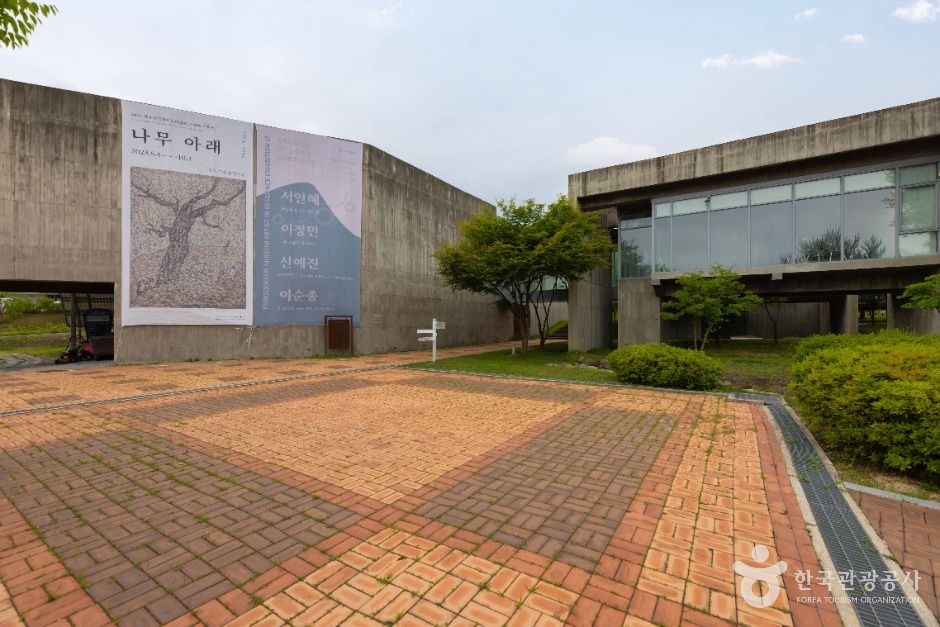
The Park Soo-keun Museum is built on the site of the artist’s home village. Designed with sleek stone architecture that echoes the granite textures of his artwork, the museum integrates seamlessly into the surrounding countryside. Visitors can wander through light-filled galleries displaying his original sketches and paintings, explore temporary modern art exhibitions, and walk along landscaped outdoor paths lined with wildflowers and stream beds. It offers a meditative cultural experience far removed from crowded city galleries.
Yanggu has a rich ceramic heritage that dates back hundreds of years to the Joseon Dynasty. The region was historically famous for its high-quality kaolin clay, which was a critical raw material used in royal white porcelain production in the capital. The Yanggu White Porcelain Museum highlights this heritage through exhibitions of historic porcelain shards, restored kilns, and fine historical vessels. Visitors can learn about the traditional processing of porcelain stone and see contemporary ceramic artists who continue to work in the area using local materials.
Food in Yanggu reflects its geography and northern mountain climate. The local diet relies heavily on sun-dried vegetables, mountain herbs, hearty soybeans, and cold-climate crops that thrive in the dramatic temperature swings between night and day.
If there is one culinary ingredient that defines Yanggu, it is siraegi—the leaves and stems of radish plants that are carefully harvested in autumn and hung to dry naturally in the cold mountain winds. Because of the basin’s distinct microclimate, Yanggu siraegi turns out remarkably tender, fragrant, and rich in nutrients.
Local restaurants specialize in various siraegi dishes. One of the most popular is siraegi-bap, where tender dried greens are cooked directly with rice in a hot stone pot, served alongside savory soy seasoning or roasted perilla oil. Another staple is siraegi-jeongol, a deeply satisfying stew featuring dried greens simmered in a rich soybean paste broth with local tofu and mushrooms. The flavor is earthy, comforting, and quintessentially countryside Korean.
Due to the vast surrounding forests, Yanggu is renowned for wild mountain vegetables, known collectively as sanchae. Gathered from high-altitude slopes, these herbs and greens are served either fresh or gently seasoned with sesame oil, garlic, and wild fermented sauces. Ordering a sanchae-bibimbap in Yanggu allows travelers to sample dozens of distinct varieties of wild greens over a bed of warm rice, offering a clean, nutritious taste of the region’s flora.
Yanggu’s cold winter temperatures have inspired a culture of warm, comforting dishes. Local specialties include handcrafted soft tofu made daily from locally grown soybeans, savory buckwheat pancakes, and slow-cooked pork or chicken dishes infused with mountain medicinal herbs. Paired with a glass of local rice wine or wild berry liquor, a meal in Yanggu feels authentically rooted in the land.
Traveling to a border county requires a tiny bit of extra preparation compared to standard tourist destinations in South Korea, but the effort is simple and well worth it.
Because several top sights in Yanggu—such as Dutayeon Valley, the Fourth Tunnel, and Eulji Observatory—are situated inside or near the Civilian Control Line (CCL), security protocols are strictly maintained by military authorities.
Yanggu experiences four distinct seasons, each offering a unique scenic perspective:
Access rules, opening days, shuttle services, and border security requirements for venues in border counties can shift due to seasonal conditions, local maintenance, or military protocols. International travelers are strongly advised to check official Gangwon State or Yanggu County tourism information pages prior to planning their daily itinerary.