Physical Address
304 North Cardinal St.
Dorchester Center, MA 02124
Physical Address
304 North Cardinal St.
Dorchester Center, MA 02124

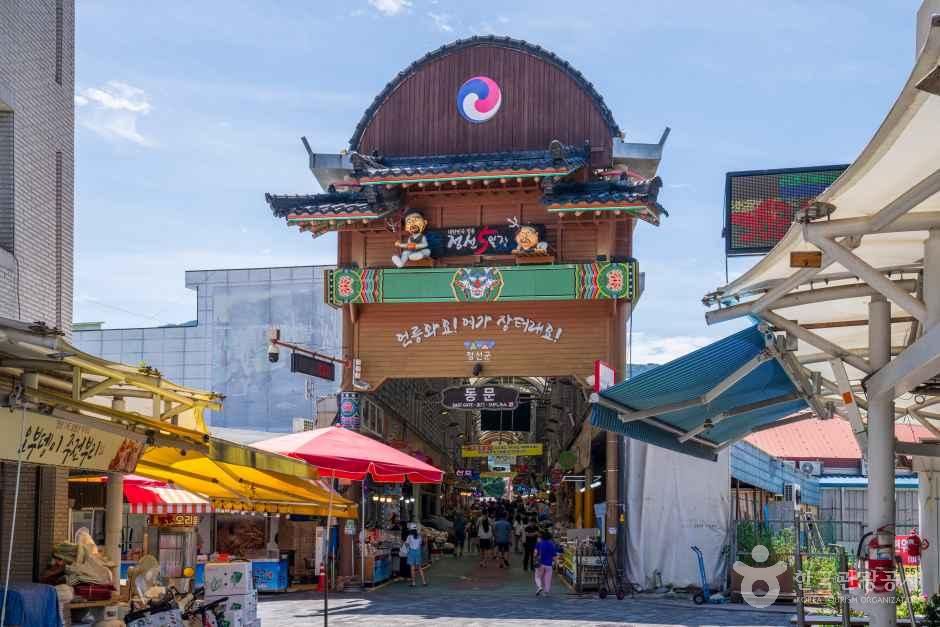
Explore Jeongseon in Gangwon State: traditional markets, scenic rail journeys, and historic mountain villages tucked in South Korea's high country.
Tucked deep within the craggy peaks and winding river valleys of eastern Gangwon State, Jeongseon County offers international travellers a profound departure from the ultra-modern pace of Seoul and Busan. For decades, this rugged alpine district was known primarily for two things: its historical isolation and its former role as a bustling anthracite coal mining center. Today, as those industrial days have receded into history, Jeongseon has reinvented itself into one of South Korea’s most compelling eco-tourism and cultural destinations.
What makes Jeongseon exceptionally rewarding for foreign visitors is its authentic preservation of folk culture, its dramatic mountain topography, and a slow-travel infrastructure built around heritage rail journeys and converted train tracks. Here, amidst misty pine forests and limestone cliffs, you will discover the birthplace of Jeongseon Arirang—the most soulful and evocative variant of Korea’s legendary lyrical folk song—alongside bustling open-air markets and revitalized mining hamlets that invite thoughtful exploration.
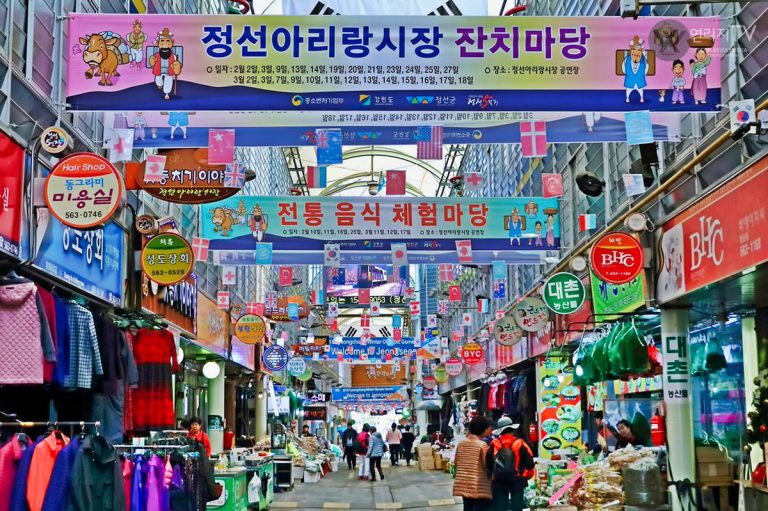
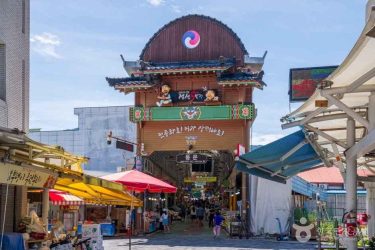
To understand the soul of Jeongseon, your journey should begin at the Jeongseon Arirang Market. Established in the mid-twentieth century, this venue remains one of South Korea’s most famous traditional markets. While vendors open their stalls every day, the market truly springs to life on designated special market days—traditionally held on dates ending in 2 and 7 (such as the 2nd, 7th, 12th, 17th, 22nd, and 27th of each month), as well as on weekends.
On these prime market days, local farmers, wild-herb foragers, and artisans descend from surrounding mountain hamlets to sell their goods. Navigating the crowded aisles is a multi-sensory experience. You will see sacks overflowing with sun-dried red peppers, pungent medicinal roots, wild ferns, and freshly harvested mountain vegetables known locally as namul.
Gangwon State is renowned for its mountain-based cuisine, heavily reliant on buckwheat, wild greens, corn, and potatoes rather than rice, which historically was difficult to cultivate in these steep valleys. While exploring the market lanes, make a point to sit on a low wooden bench and try these regional culinary specialties:
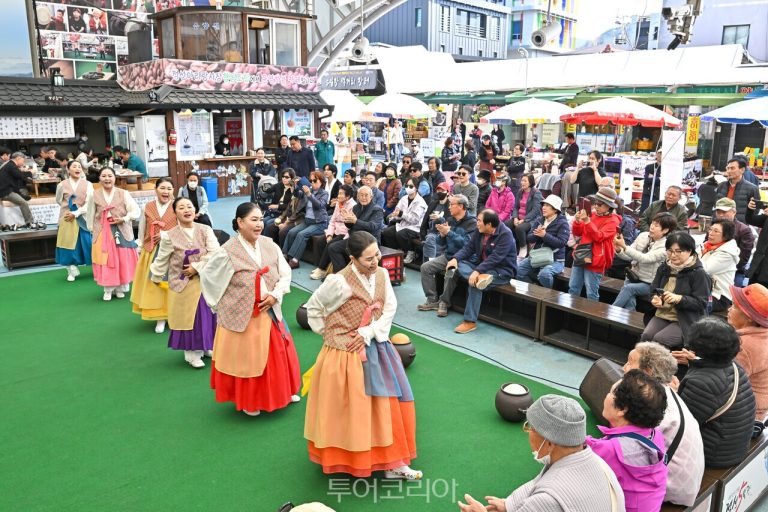
Beyond the food, the market regularly hosts brief outdoor performances of the Jeongseon Arirang song. Listening to the melodic, melancholic cadence performed live by local singers provides an unforgettable window into the historic joys and hardships of life in these isolated peaks.
Because Jeongseon’s steep geography made road building difficult for many decades, railways were the lifeblood of the region. Today, these historic lines have been creatively adapted for sightseeing, offering some of the most scenic rail travel experiences in Northeast Asia.
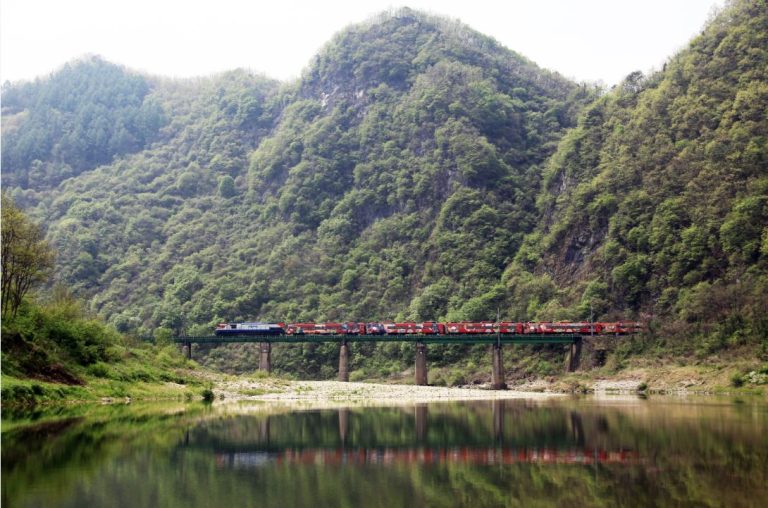
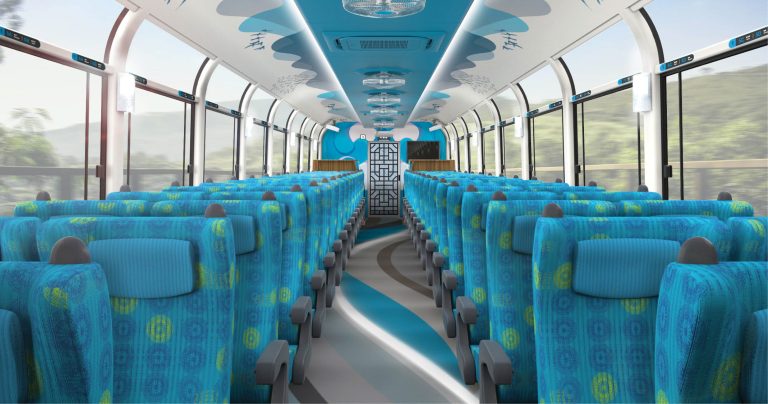
The Jeongseon Arirang Train, commonly referred to as the A-Train, is a dedicated tourist rail service operated by Korail that connects urban rail hubs with the heart of Jeongseon County. Designed with wide panoramic windows, comfortable seats, and vibrant interior decor inspired by traditional Korean motifs, the train travels at a leisure pace, allowing passengers to take in sweeping views of sheer rock faces, clear mountain rivers, and quiet rural hamlets.
Riding the A-Train is an ideal option for foreign visitors who prefer not to drive. The train route glides through valleys that remain hidden from major highways, providing an intimate look at South Korea’s high country. Inside the carriages, staff members occasionally organize light entertainment, musical demonstrations, or interactive activities tied to local folklore.

For a more active way to experience the region’s rail heritage, head to the northern stretches of the county to experience the Jeongseon Rail Bike. Built on a decommissioned section of coal railway line stretching from Gujel-ri Station down to Auraji Station, this attraction lets visitors pedal custom four-wheeled open-air rail vehicles along a gentle downward slope.
The route spans approximately seven kilometers and requires minimal physical exertion because the track angled subtly downhill. As you pedal along the track, you will cross steel bridges suspended over clear mountain streams, roll past terraced fields, and venture through cool, illuminated tunnels equipped with light shows and music. The journey ends near Auraji, where a thematic café housed inside converted train cars styled to resemble giant grasshoppers welcomes pedalers at the finish line.
Beyond the market hubs and rail lines, Jeongseon is dotted with mountain villages that offer deep insights into both ancient folklore and South Korea’s twentieth-century industrial history.
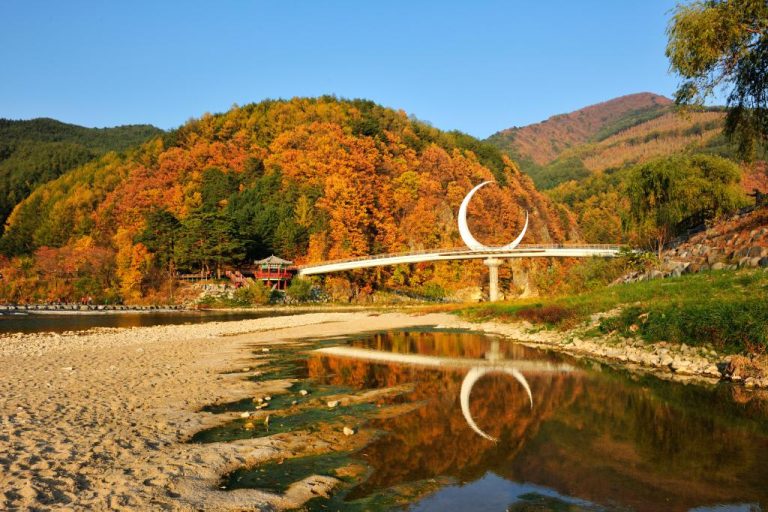
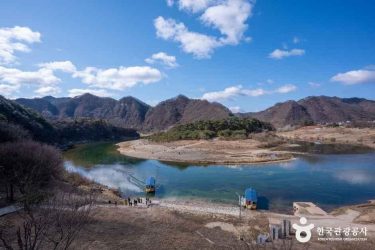
Auraji is a tranquil river junction where two major mountain streams—the Golji-cheon and Song-cheon—merge to form the headwaters of the Joyang River. Historically, Auraji was a critical staging point for timber raftsmen. Long timber logs cut from the surrounding forests were tied into massive rafts and floated all the way down the river system to Seoul to supply construction material for palaces and homes.
The location is deeply tied to the lore of Jeongseon Arirang. According to local legend, a young maiden and a young man from neighboring villages across the river fell in love, but heavy summer rains flooded the crossing, preventing them from meeting. A delicate statue of the maiden stands near the water’s edge, framed by a picturesque pedestrian suspension bridge and a traditional gazebo. Today, Auraji is a peaceful spot for walking, photo opportunities, and enjoying the mountain breeze.
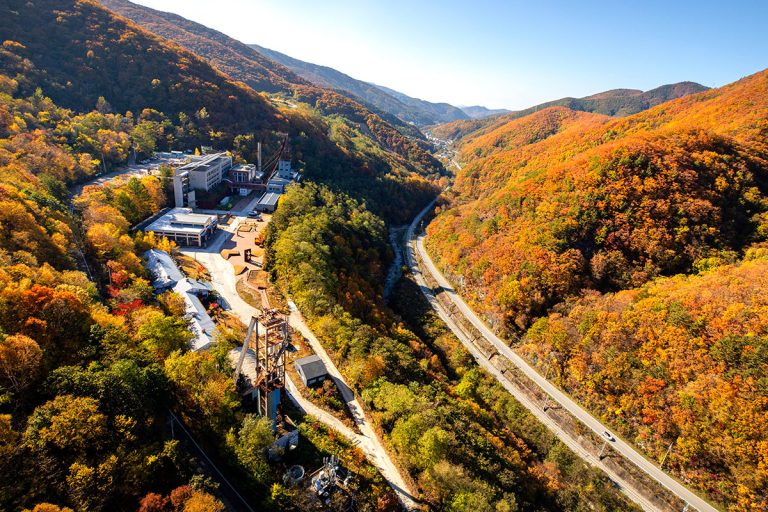
In the southern end of Jeongseon County lie the towns of Sabuk and Gohan. During the mid-to-late 1900s, this area was the bustling epicenter of South Korea’s coal energy sector. When mines began closing in the late 1990s due to shifts in global energy use, local communities faced economic decline. Rather than abandoning their history, these villages worked to transform their industrial infrastructure into cultural and arts spaces.
A prime example of this industrial rebirth is Samtan Art Mine, a former active coal mine converted into an expansive art and heritage center. The site preserves the original shaft towers, miner changing rooms, heavy machinery, and underground tunnels, artfully pairing them with contemporary sculpture galleries, international craft exhibits, and historic archives. Walking through the cavernous industrial halls creates a striking contrast between raw historical labor and creative modern reinterpretation.
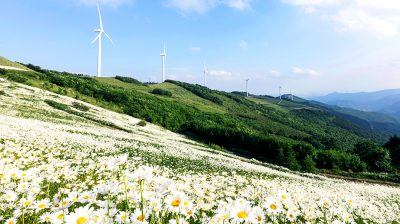
Nearby, high-altitude mountain villages like Manhangjae Pass offer cool alpine air, wild flora trails, and access to the Untan Godo—a series of historic mountain paths once used by trucks transporting coal along the high ridges. Today, these trails have been restored into world-class hiking tracks that offer breathtaking views over mountain ranges that stretch as far as the eye can see, particularly during autumn when the leaves turn vivid shades of crimson and gold.
Planning an itinerary to Jeongseon requires a bit more preparation than visiting major Korean metropolises, but the rewards far outweigh the effort. Here are practical guidelines to ensure a smooth journey:
While public buses connect main towns within Jeongseon, schedules in rural mountain areas are much less frequent than in big cities. If you do not plan to rent a vehicle, combine train travel (using the A-Train or regional trains connecting from KTX hubs like Jinbu Station) with local taxis for short jumps between sights. Using Korean navigation applications on your smartphone is highly recommended, as international map applications often have limited functionality in rural South Korea.
While modern stores and restaurants across Korea accept credit cards, smaller rural market vendors and herb sellers often prefer local cash (Korean Won). Carrying a modest amount of cash ensures you can easily sample street foods, buy snacks, or purchase fresh dried herbs directly from local grandmothers in the market alleys. Smiling and showing courtesy goes a long way, even if you speak limited Korean language.
Operating schedules for tourist trains, seasonal rail bikes, shuttle buses, and traditional market events can change based on weather, maintenance schedules, or seasonal adjustments. Foreign visitors are strongly advised to check official tourism websites or contact regional tourism info centers prior to finalizing transport bookings and daily travel itineraries.